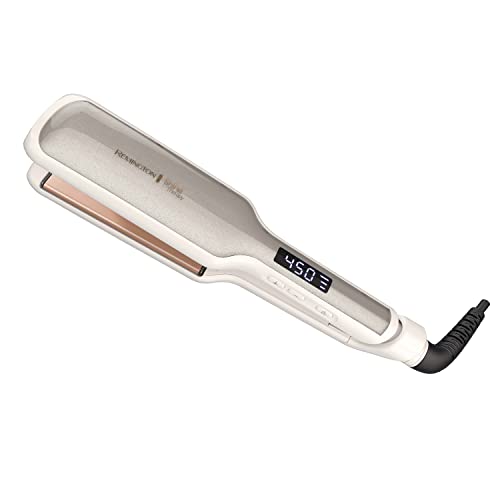
Ceramic vs. titanium vs. tourmaline plates — what is the difference?
Ceramic plates heat evenly and are gentler on most hair types, making them a solid everyday choice. Titanium heats up faster and maintains higher temperatures, which suits coarse or resistant hair but can be too aggressive for fine hair. Tourmaline-coated plates emit extra negative ions to help reduce frizz alongside heat.
What temperature should I use for my hair type?
Start low and only increase as needed: fine or color-treated hair generally works at around 250–310°F, normal hair at 300–375°F, and coarse or resistant hair at 380–450°F. Using excessive heat causes cumulative damage over time, so the lowest effective setting is always preferable.
What plate width should I choose?
A 1-inch plate works well for most hair lengths and types, and is easiest to maneuver near the roots. Wider plates (1.5–2 inches) cover more hair per pass and suit longer or thicker hair. Narrower plates (under 1 inch) give more precision for bangs or detailed work.
How do I reduce heat damage from a flat iron?
Apply a heat protectant to dry hair before styling, work in small sections, and make one slow controlled pass rather than repeated quick passes. Avoid daily use if possible, and always use the lowest temperature setting that gives the result you want.
What is auto shut-off and why does it matter?
Auto shut-off turns the flat iron off after a set idle period — often 30–60 minutes — as a safety precaution against fire or surface damage if the iron is left unattended. Many models include this feature; check the spec sheet if it matters for your household.
Can I use a flat iron on wet hair?
Standard flat irons should only be used on dry or nearly dry hair. Using a traditional flat iron on wet hair can cause steam damage and breakage. The Dyson Airstrait is specifically designed for wet-to-dry styling and uses a different airflow mechanism rather than direct plate contact.
What is the best flat iron for Black hair?
Black hair — particularly Type 3c through 4c coils — tends to be denser and more resistant to straightening than straighter hair types, which means it often needs higher heat and a plate material that holds temperature consistently. Titanium plates heat up fast and sustain temperatures up to 450°F without dropping between passes, which helps reduce the number of passes needed on tightly coiled strands. A 1 to 1.5-inch plate width gives enough surface area to work through sections efficiently without being unwieldy at the roots. Because high heat is involved, applying a quality heat protectant to dry hair before every session is especially important to reduce long-term damage.
What is the best flat iron for frizzy hair?
Frizz is largely caused by a raised hair cuticle — heat styling can temporarily smooth the cuticle, and certain plate technologies help hold that result longer. Ionic and tourmaline-coated plates emit negative ions that counteract static and help seal the cuticle as you style. Ceramic plates heat evenly without hot spots, which reduces the kind of uneven cuticle damage that creates more frizz over time. At the technique level, slow single passes at a moderate temperature (300–375°F for most textured hair) are more effective than fast repeated passes. Sealing with a cool-shot from a hair dryer or allowing the styled section to cool before touching it helps lock in smoothness.